Workplace safety is no longer just a compliance requirement. For businesses operating in construction, manufacturing, infrastructure, engineering, and industrial sectors, maintaining a safe working environment is essential for protecting employees, improving operational efficiency, and managing business risks.
However, many organizations in India still depend on spreadsheets, paper-based inspections, disconnected reporting systems, and manual safety registers to manage their Environment, Health, and Safety (EHS) activities. These traditional methods make it difficult to monitor workplace hazards, track safety observations, manage audits, and ensure that corrective actions are completed on time.
This is where EHS Software in India is becoming increasingly important.
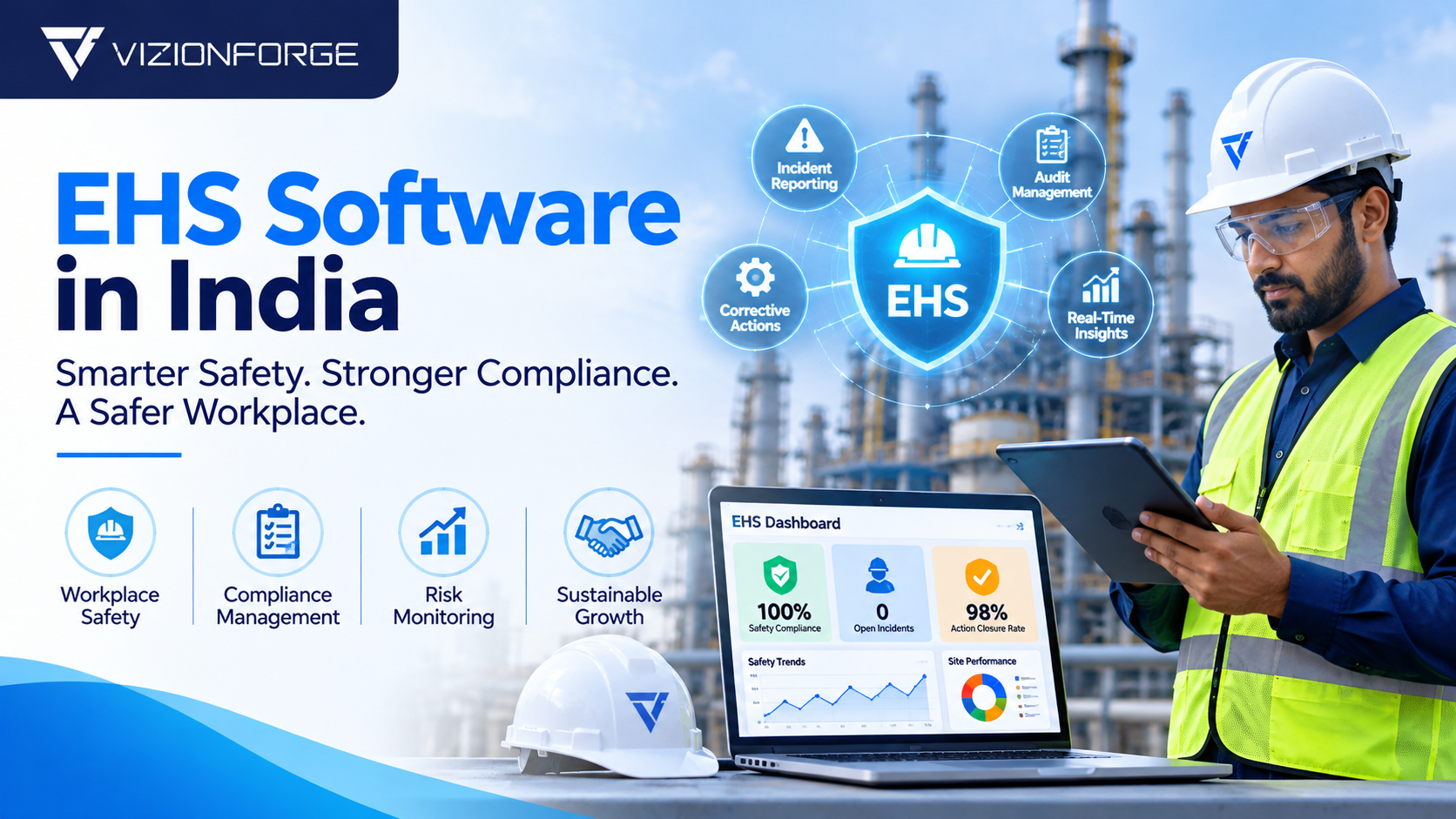
Modern EHS software helps organizations digitize safety inspections, manage compliance activities, monitor workplace risks, maintain audit records, and improve visibility across multiple projects and facilities.
With increasing operational complexity and growing expectations around workplace safety, businesses need a centralized digital approach to managing EHS processes.
Solutions such as SafeOps360 by VizionForge help organizations connect quality audits, EHS management, corrective actions, and management reporting through an integrated enterprise platform.
What Is EHS Software?
EHS software is a digital platform designed to help organizations manage environmental, health, and safety activities through centralized workflows.
Instead of maintaining separate records for inspections, safety observations, audits, and corrective actions, businesses can use EHS software to organize these activities in one system.
EHS Software in India supports organizations in managing important workplace safety processes, including:
Workplace safety inspections and audits.
Hazard identification and risk assessment.
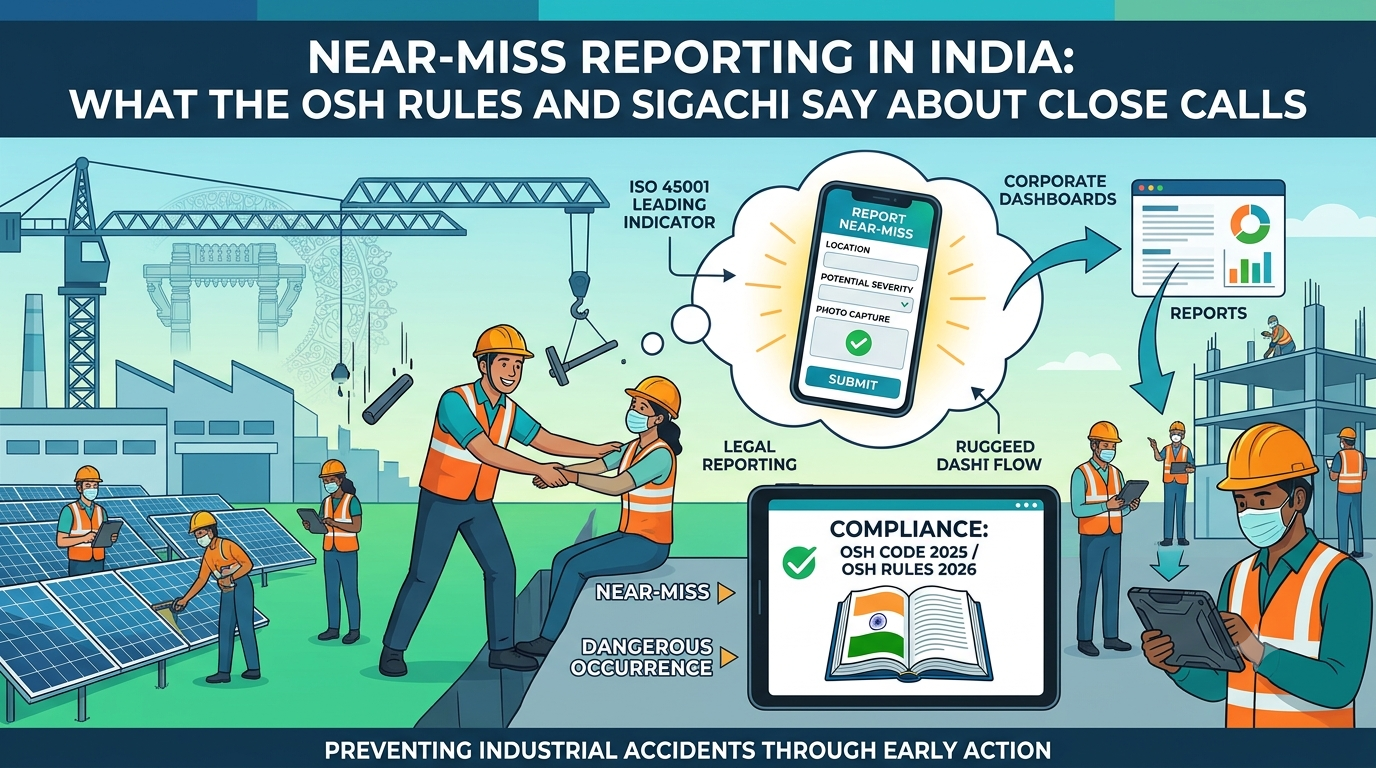
Incident and near-miss reporting.
Corrective and preventive action management.
Safety documentation and compliance records.
Employee safety performance monitoring.
Management dashboards and reporting.
Multi-location safety performance tracking.
By bringing these activities together, EHS software helps businesses improve accountability, reduce administrative work, and make better safety-related decisions.
Why Businesses in India Need EHS Software
Indian businesses often manage complex operations involving employees, contractors, suppliers, equipment, and multiple project locations. Maintaining consistent safety practices across these environments can be challenging.
Manual processes can create information gaps, delayed reporting, incomplete documentation, and limited visibility for senior management.
Implementing EHS Software in India helps organizations address these challenges through structured and centralized safety management.
1. Simplified Workplace Safety Inspections
Regular workplace inspections are essential for identifying unsafe conditions before they result in incidents.
Traditional inspection processes often involve printed checklists, handwritten observations, and manually prepared reports.
EHS software allows safety teams to digitize inspection workflows, record observations, attach supporting evidence, and assign findings to responsible individuals.
This creates a more organized inspection process and makes it easier to monitor outstanding safety issues.
2. Better Incident and Near-Miss Management
Workplace incidents and near misses provide important information about potential safety risks.
Without a structured reporting system, organizations may struggle to identify recurring hazards or understand why similar incidents continue to happen.
EHS management software helps establish a documented process for reporting, investigating, and tracking incidents.
Organizations can use these records to identify patterns, assign corrective actions, and improve preventive safety measures.
3. Improved Compliance Management
Businesses must manage applicable occupational health, safety, and environmental requirements according to their industry, location, and operational activities.
Maintaining compliance documentation manually can become difficult, especially when multiple facilities and departments are involved.
EHS Software in India helps centralize safety records, inspection reports, audit findings, and corrective action evidence.
This supports better documentation and makes relevant information easier to retrieve during internal reviews and external audits.
4. Centralized Management Across Multiple Locations
Construction companies and infrastructure developers frequently operate across multiple projects and geographical locations.
Without centralized reporting, management may have difficulty comparing safety performance and identifying projects that require additional attention.
A centralized EHS platform provides management teams with consolidated information about inspections, findings, outstanding actions, and project-level performance.
This improves visibility and supports more consistent safety governance.
Key Features to Look for in EHS Software in India
Choosing the right EHS software requires understanding the safety management requirements of your organization.
A useful platform should support practical workflows rather than simply digitizing existing paperwork.
Here are some important features businesses should consider.
1. Digital EHS Audit Management
An effective EHS platform should support structured audits with defined checkpoints, inspection records, observations, and supporting photographs.
Auditors should be able to record findings, classify non-conformities, and submit reports through a standardized workflow.
Digital audit management improves consistency and reduces the effort required to prepare and maintain audit documentation.
2. Corrective and Preventive Action Management
Identifying a safety issue is only the first step. Organizations must also ensure that the issue is investigated and resolved.
EHS software should provide a structured corrective action management process that includes:
Identification of non-conformities.
Assignment of responsible individuals.
Root cause investigation.
Corrective action planning.
Target completion dates.
Supporting closure evidence.
Review and verification.
This creates clear ownership and helps managers monitor unresolved findings.
3. ISO 45001 Alignment
ISO 45001 provides an internationally recognized framework for occupational health and safety management systems.
Organizations implementing ISO 45001 need structured processes for identifying hazards, managing risks, monitoring performance, investigating incidents, and taking corrective action.
EHS software can support these activities by maintaining organized audit records, documenting findings, and tracking corrective actions.
When selecting EHS Software in India, businesses should evaluate whether the platform supports their ISO 45001-related processes and documentation requirements.
4. Real-Time MIS Dashboards
Management teams need reliable information to understand safety performance across their organization.
An EHS management information system (MIS) dashboard can bring important safety indicators into one view.
Useful indicators may include:
Number of safety audits completed.
Open and closed audit findings.
Corrective action closure status.
Near-miss reporting trends.
Safe man-hours.
Lost Time Injury (LTI) information.
Project-wise safety performance.
These insights help management identify operational gaps and prioritize safety improvements.
5. Role-Based Access and Accountability
Different employees require different levels of access to safety information.
For example, an administrator may manage multiple projects, while an auditor should access assigned inspections and an auditee should respond to findings relevant to their responsibilities.
Role-based access control helps maintain appropriate permissions and creates a more organized responsibility structure.
6. Digital Reports and Audit Trails
Maintaining accurate documentation is important for internal reviews, management reporting, and external audits.
EHS software should support structured reports containing inspection details, observations, photographs, corrective actions, and closure information.
Branded PDF reports and organized records can make documentation easier to review and share with relevant stakeholders.
Benefits of Implementing EHS Software in India
The right EHS software can deliver operational benefits across safety, compliance, and management functions.
Reduced Administrative Work: Digital workflows reduce dependence on spreadsheets, paper records, and repeated manual reporting.
Improved Accountability: Assigning findings and corrective actions to specific individuals creates clearer ownership.
Better Safety Visibility: Centralized dashboards help management understand safety performance across projects and locations.
Stronger Audit Readiness: Organized records and supporting evidence make it easier to retrieve information during reviews.
Consistent Safety Processes: Standardized workflows help organizations follow similar inspection and reporting practices across different locations.
Data-Driven Decision-Making: Historical audit information and safety indicators help management identify recurring problems and prioritize improvements.
How EHS Software Supports Construction and Infrastructure Companies
Construction and infrastructure projects involve multiple contractors, subcontractors, equipment operators, engineers, and safety professionals.
Activities such as excavation, electrical installation, structural work, material handling, and working at height require appropriate safety planning and monitoring.
Managing these activities through disconnected systems can create information gaps.
EHS Software in India can help construction businesses organize project-level inspections, safety audits, observations, and corrective action workflows.
For example, when an auditor identifies a safety-related non-conformity during a site inspection, the finding can be documented with photographs and assigned to the responsible team.
The assigned individual can respond with corrective action evidence, allowing the relevant reviewer to verify and close the finding.
This creates a traceable process from identification to resolution.
Introducing SafeOps360 by VizionForge
SafeOps360 by VizionForge is an enterprise QHSE platform designed for construction and infrastructure projects.
It brings quality audits, EHS audit management, corrective action tracking, and management information reporting into a centralized digital environment.
Built using technologies including React PWA, OutSystems ODC, Azure ML, Azure SQL, and Synapse Analytics, SafeOps360 supports structured audit management and project-level visibility.
Key capabilities include:
Quality and EHS Audit Management
SafeOps360 supports structured audits with checkpoint-level inspection records, observations, decisions, comments, and photographic evidence.
Five Role-Based User Types
The platform supports five user roles:
Admin
Project Head
Auditor
Auditee
Viewer
Each role has defined access and responsibilities to support controlled audit workflows.
Corrective Action Tracking
Audit findings can be assigned to responsible individuals for responses, evidence submission, and closure.
This helps organizations maintain visibility into unresolved non-conformities.
MIS Dashboard
Management teams can access consolidated project information through an MIS dashboard to monitor audit activity and outstanding findings.
Branded PDF Reports
SafeOps360 supports interim and final PDF audit reports with company branding, helping organizations maintain structured documentation.
VizionForge reports deployment across 25+ construction and infrastructure projects, with 397+ audits managed through the platform.
For businesses evaluating EHS Software in India, SafeOps360 offers an integrated approach to connecting audit management, corrective actions, and project-level reporting.
Explore the platform: https://www.vizionforge.com/products/safeops360
How to Choose the Right EHS Software for Your Business
Before implementing EHS software, organizations should evaluate their operational requirements and existing safety management processes.
Consider these factors:
Industry requirements: Select a solution that supports your construction, manufacturing, infrastructure, or industrial safety workflows.
Audit management: Check whether the platform supports structured inspections, checkpoints, evidence, and reporting.
Corrective action tracking: Ensure findings can be assigned, monitored, reviewed, and closed.
Dashboard capabilities: Look for project-wise and organization-wide reporting.
User permissions: Verify that different employees can access information according to their responsibilities.
Scalability: Choose software that can support additional projects, locations, and users as your organization grows.
Implementation support: Understand configuration, training, deployment, and ongoing support requirements.
The best EHS Software in India is one that fits your organization's actual safety processes and encourages employees to use it consistently.
The Future of EHS Management in India
The future of workplace safety management is becoming increasingly digital.
Organizations are moving beyond paper-based reporting towards centralized platforms that provide better access to safety information and improve coordination between project teams and management.
Technologies such as artificial intelligence, predictive analytics, mobile applications, and automated reporting can further support EHS operations.
These technologies may help organizations identify recurring safety patterns, prioritize high-risk areas, and improve the speed of information sharing.
However, technology alone cannot create a safe workplace. Strong leadership, employee participation, effective training, and consistent implementation remain essential.
EHS software works best when it becomes part of everyday operational decision-making rather than just another compliance tool.
Conclusion
EHS Software in India is becoming an important investment for organizations that want to strengthen workplace safety, improve compliance management, and gain better visibility into operational risks.
By digitizing safety audits, managing corrective actions, organizing documentation, and providing centralized dashboards, businesses can move towards a more structured and accountable approach to EHS management.
With SafeOps360, VizionForge helps construction and infrastructure organizations connect quality audits, EHS processes, corrective action tracking, and management reporting through an integrated enterprise platform.
If your organization is looking to modernize its safety management processes, explore SafeOps360 and discover how digital QHSE management can support safer, more organized operations.
Explore SafeOps360: https://www.vizionforge.com/products/safeops360